
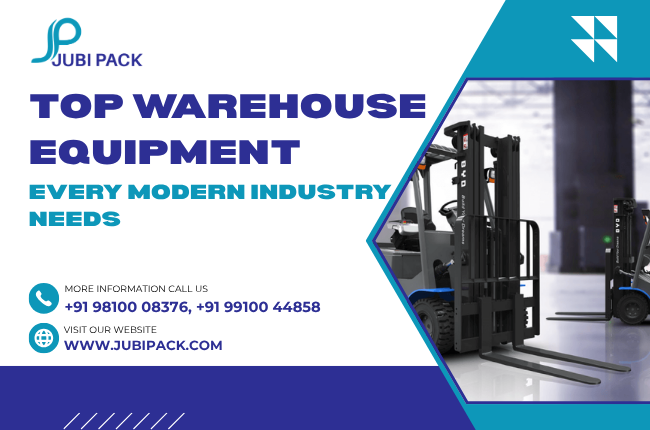
Top Warehouse Equipment Every Modern Industry Needs
Modern industries rely on efficient warehouse operations to meet customer demands, improve productivity, and reduce operational costs. Whether it is manufacturing, logistics, retail, pharmaceuticals, automotive, or e-commerce, the success of warehouse operations depends largely on selecting the right warehouse equipment. Investing in reliable industrial warehouse solutions not only streamlines material movement but also improves workplace safety, minimizes downtime, and maximizes storage utilization.
As warehouses continue to embrace automation and advanced material handling technologies, businesses are replacing outdated equipment with smarter, faster, and more energy-efficient alternatives. From forklifts and pallet trucks to racking systems and order pickers, every piece of equipment serves a specific purpose in creating an organized and productive warehouse environment.
This guide explores the top warehouse equipment every modern industry should consider for efficient material handling and long-term operational success.
Why Warehouse Equipment Matters
Warehouse equipment is much more than machinery used for lifting and transporting goods. It directly impacts operational efficiency, inventory accuracy, employee safety, and customer satisfaction.
Well-planned industrial warehouse solutions enable businesses to:
- Improve workflow efficiency
- Reduce manual labor
- Minimize product damage
- Increase warehouse capacity
- Enhance employee safety
- Lower operating costs
- Improve inventory management
- Increase overall productivity
Choosing the right warehouse equipment ensures that goods move smoothly from receiving to storage, order picking, packing, and shipping.
1. Electric Forklifts
Electric forklifts have become one of the most important pieces of modern warehouse equipment. Powered by advanced lithium-ion batteries, they offer clean, quiet, and efficient operation compared to traditional diesel or LPG forklifts.
Modern electric forklifts are suitable for indoor warehouses because they produce zero emissions, require minimal maintenance, and offer excellent maneuverability.
Benefits include:
- Zero emissions
- Low maintenance requirements
- Faster battery charging
- Reduced operating costs
- Improved operator comfort
- High lifting capacity
Electric forklifts are ideal for manufacturing plants, warehouses, logistics hubs, and distribution centers.
2. Pallet Trucks
Pallet trucks are essential for transporting palletized goods over short distances. They are widely used in warehouses, retail stores, factories, and shipping facilities.
Available in manual and electric models, pallet trucks simplify loading, unloading, and internal transportation while reducing operator fatigue.
Advantages include:
- Easy material transportation
- Compact design
- Affordable operation
- Increased productivity
- Reduced physical strain
Electric pallet trucks are particularly useful in high-volume warehouse environments.
3. Reach Trucks
Reach trucks are specifically designed for narrow aisles and high-level storage systems. They allow operators to retrieve pallets from elevated racking while maximizing warehouse storage capacity.
These machines are ideal for warehouses with vertical storage solutions where space optimization is essential.
Key advantages include:
- High lifting heights
- Excellent stability
- Narrow aisle operation
- Increased storage efficiency
- Improved inventory accessibility
Reach trucks play an important role in modern industrial warehouse solutions.
4. Electric Stackers
Electric stackers provide an economical solution for lifting and stacking pallets where forklifts may not be necessary.
They are widely used in medium-sized warehouses, manufacturing facilities, and inventory storage areas.
Benefits include:
- Easy pallet stacking
- Compact operation
- Lower operating costs
- Safe lifting
- Improved warehouse organization
Stackers are particularly useful for businesses handling medium-duty material movement.
5. Warehouse Racking Systems
Storage efficiency depends heavily on selecting the right racking system. Modern warehouses use various storage configurations to maximize available floor space while improving inventory management.
Common warehouse racking systems include:
- Selective pallet racking
- Drive-in racking
- Double deep racking
- Cantilever racking
- Mobile racking
- Mezzanine storage systems
Proper racking improves warehouse organization while reducing product damage and retrieval time.
6. Order Pickers
Order pickers are designed for warehouses with frequent picking operations. They allow operators to safely access elevated storage locations while improving picking speed and accuracy.
Industries such as e-commerce, pharmaceuticals, electronics, and retail heavily rely on order pickers.
Major advantages include:
- Faster order fulfillment
- Reduced picking errors
- Improved employee safety
- Better inventory accuracy
- Increased productivity
7. Conveyor Systems
Conveyor systems automate material movement between different warehouse sections.
Instead of relying entirely on manual transportation, conveyors continuously move products from receiving to storage, packing, and shipping.
Benefits include:
- Continuous workflow
- Reduced labor costs
- Faster processing
- Improved product handling
- Increased operational efficiency
Conveyors are widely used in automated warehouses and large distribution centers.
8. Dock Levelers
Dock levelers bridge the height difference between loading docks and transport vehicles, allowing forklifts and pallet trucks to move goods safely.
Their advantages include:
- Safer loading operations
- Faster vehicle turnaround
- Reduced loading damage
- Increased operational safety
- Improved logistics efficiency
Every modern warehouse with regular shipping activities benefits from quality dock levelers.
9. Scissor Lifts
Scissor lifts provide safe vertical access for maintenance, warehouse inspections, and elevated material handling tasks.
Unlike ladders, they offer stable working platforms and enhanced operator safety.
Applications include:
- Warehouse maintenance
- Equipment installation
- Lighting repairs
- Inventory inspections
- Building maintenance
10. Forklift Attachments
Forklift attachments extend the capabilities of standard forklifts without purchasing additional machinery.
Popular attachments include:
- Paper roll clamps
- Drum handlers
- Rotators
- Fork positioners
- Carpet poles
- Bale clamps
- Multiple pallet handlers
These attachments increase operational flexibility across various industries.
How to Choose the Right Warehouse Equipment
Selecting warehouse equipment depends on several operational factors, including warehouse size, storage layout, product type, load capacity, and future business growth.
Before making an investment, businesses should evaluate:
- Warehouse dimensions
- Floor conditions
- Aisle width
- Load capacity requirements
- Daily operating hours
- Equipment maintenance needs
- Operator training
- Battery charging infrastructure
- Safety compliance
- Long-term operational costs
A carefully planned investment delivers higher productivity and a better return over time.
Benefits of Modern Industrial Warehouse Solutions
Modern industrial warehouse solutions provide far more than equipment—they help businesses build efficient, safe, and scalable operations.
Key benefits include:
- Faster material movement
- Improved inventory management
- Reduced equipment downtime
- Lower maintenance costs
- Better warehouse safety
- Increased storage utilization
- Enhanced employee productivity
- Lower operating expenses
- Higher customer satisfaction
- Sustainable warehouse operations
These advantages make advanced warehouse equipment a valuable investment for companies seeking long-term growth.
Future Trends in Warehouse Equipment
Warehouse operations continue to evolve with technological advancements. Businesses are increasingly adopting intelligent equipment to improve efficiency and reduce manual intervention.
Emerging trends include:
- Lithium-ion battery forklifts
- Smart fleet management systems
- Automated Guided Vehicles (AGVs)
- Warehouse Management System (WMS) integration
- IoT-enabled equipment monitoring
- AI-powered predictive maintenance
- Energy-efficient warehouse machinery
- Semi-autonomous forklifts
Companies investing in these technologies will be better prepared for the future of warehouse management.
Conclusion
Selecting the right warehouse equipment is essential for building a productive, safe, and cost-effective warehouse. From electric forklifts and pallet trucks to reach trucks, stackers, conveyors, and advanced storage systems, every piece of equipment contributes to smoother material flow and improved operational efficiency.
Modern industrial warehouse solutions help businesses reduce downtime, optimize storage space, enhance workplace safety, and improve overall productivity. As warehousing continues to evolve with automation and smart technologies, investing in high-quality equipment becomes a strategic decision that supports long-term growth and operational excellence.
Businesses that choose reliable warehouse equipment today are better positioned to meet tomorrow's logistics challenges while delivering faster, safer, and more efficient operations.