
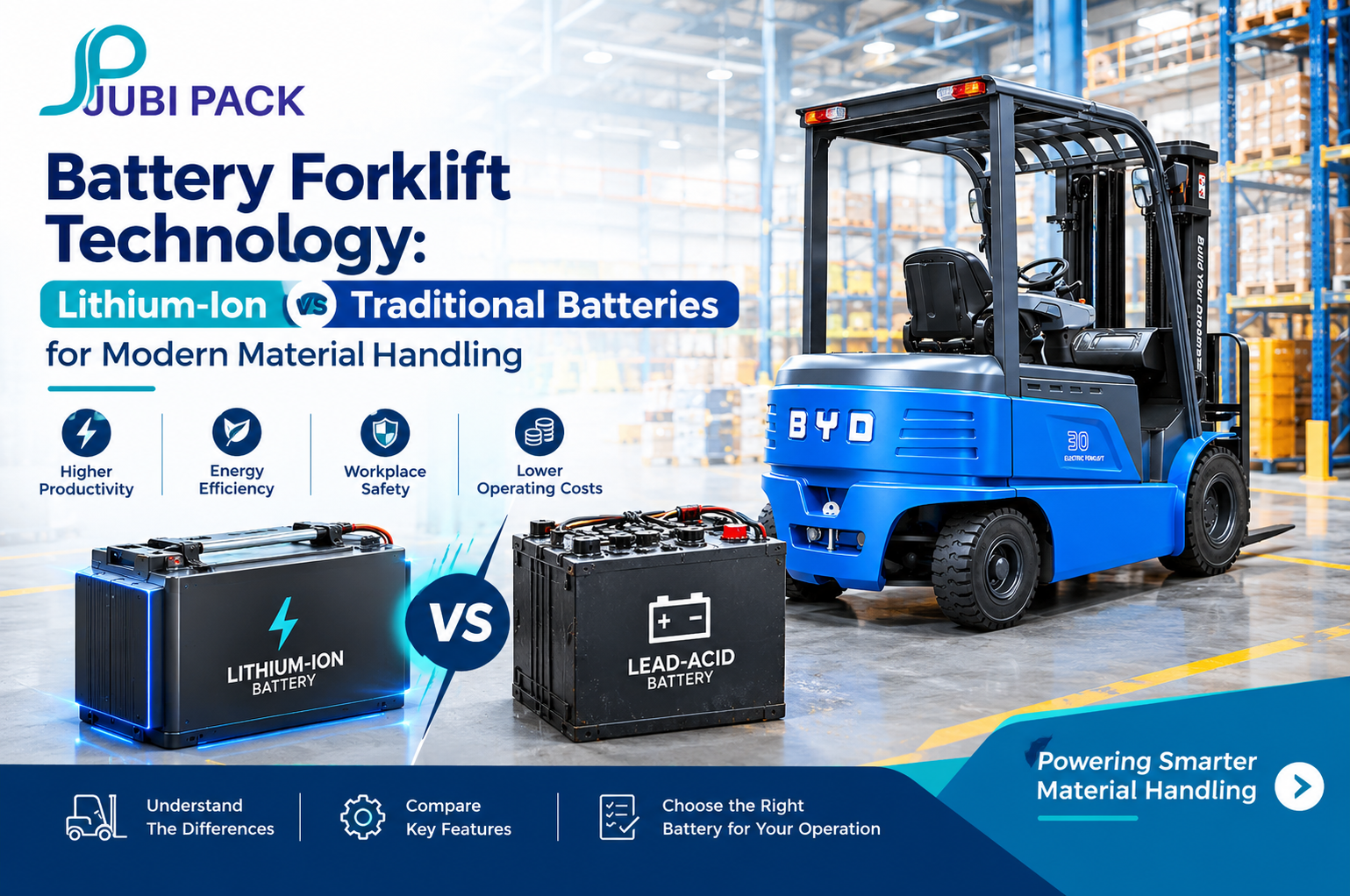
Battery Forklift Technology: Lithium-Ion Vs Traditional Batteries For Modern Material Handling
Material handling operations are becoming increasingly focused on productivity, energy efficiency, workplace safety, and lower operating costs. As warehouses, manufacturing units, distribution centres, and logistics facilities modernise their fleets, electric forklifts have become an important alternative to conventional fuel-powered equipment. At the centre of an electric forklift's performance is its battery.
Choosing the right battery forklift technology can directly affect operating hours, charging requirements, maintenance schedules, productivity, and the overall cost of material handling. Traditionally, lead-acid batteries have powered electric forklifts for decades. Today, lithium-ion technology is increasingly being considered for applications where fast charging, reduced maintenance, and multi-shift operation are important.
Understanding Battery Forklift Technology
A battery-powered forklift uses stored electrical energy to drive the truck and operate its lifting system. The battery also contributes significantly to the overall design and operating characteristics of the forklift. Electric forklifts are particularly common in indoor warehouses and material handling environments because they operate quietly and produce no direct exhaust emissions.
The two major battery technologies used in modern applications are lead-acid and lithium-ion. While both can power a battery forklift truck, their charging processes, maintenance requirements, operating characteristics, and suitability for different work schedules vary considerably.
Traditional Lead-Acid Batteries for Forklifts
Lead-acid remains a well-established choice for electric forklifts. These batteries use lead plates and sulfuric-acid electrolyte and have historically been used because of their established technology, availability, and relatively lower initial purchase cost.
However, traditional batteries require regular attention. Depending on the battery design and operating conditions, maintenance can include monitoring electrolyte levels, checking connections, inspecting cables, and ensuring appropriate charging practices. Overcharging, undercharging, or excessive discharge can shorten battery life.
Charging also requires appropriate infrastructure. Lead-acid forklift batteries can generate hydrogen during charging, making adequate ventilation and appropriate safety procedures important. Charging areas may also need provisions for electrolyte spills, emergency eyewash facilities, fire protection, and trained personnel.
For operations with predictable single-shift schedules and established charging facilities, lead-acid technology can still be a practical option.
Lithium-Ion: The New Generation of Forklift Battery
Lithium-ion batteries have changed expectations around forklift battery performance. One of their key characteristics is the ability to maintain a relatively consistent voltage during discharge compared with lead-acid technology. This can provide a more consistent power profile during operation.
Lithium-ion systems also support opportunity charging, allowing equipment to be recharged during suitable breaks or periods when the forklift is not actively working. This can be particularly useful in high-utilisation facilities where forklifts operate across multiple shifts.
Another important advantage is reduced routine maintenance. Unlike conventional flooded lead-acid batteries, lithium-ion systems do not require regular electrolyte watering. The U.S. Department of Energy's industrial electrification assessment identifies lithium-ion batteries as having lower maintenance requirements and faster recharging characteristics compared with lead-acid alternatives.
Lithium-Ion vs Lead-Acid: Key Differences
The right battery for forklift applications depends on how the equipment will be used. A simple comparison helps identify the operational differences.
Charging: Lead-acid batteries generally require longer charging periods, while lithium-ion systems are better suited to frequent opportunity charging.
Maintenance: Lead-acid batteries require more routine maintenance, including electrolyte and water-level management where applicable. Lithium-ion batteries generally require less routine battery maintenance.
Operating schedule: Lead-acid technology can work effectively for predictable schedules, but multi-shift operations may require additional batteries and battery-changing infrastructure. Lithium-ion technology can be advantageous where opportunity charging supports continuous utilisation.
Initial investment: Lithium-ion batteries generally have a higher initial cost. However, purchase price alone does not determine the total cost of ownership; energy consumption, maintenance, charging infrastructure, battery life, and productivity should also be considered.
Charging environment: Traditional lead-acid charging areas require careful consideration of ventilation and hydrogen generation. Lithium-ion systems can reduce some of these charging-area requirements, although appropriate manufacturer and workplace safety procedures remain essential.
Choosing the Right Forklift Battery for Your Operation
Before purchasing a forklift electric battery, businesses should evaluate their actual operating conditions rather than choosing solely on battery chemistry.
Start by assessing daily operating hours. A warehouse running one predictable shift may have different requirements from a distribution centre operating continuously. Next, consider available charging space, electrical infrastructure, ambient temperature, load weight, travel distances, and the number of forklifts in the fleet.
The charging strategy is equally important. If equipment can be parked and charged overnight, conventional technology may meet the operational requirement. If forklifts need to remain available for extended periods, fast or opportunity charging can become a more important consideration.
Businesses should also evaluate battery replacement procedures. Lead-acid batteries are heavy, and changing them requires appropriate lifting equipment and trained personnel. OSHA recommends using suitable lifting equipment for battery removal and emphasises safe charging and handling procedures.
Safety and Battery Maintenance
Regardless of the selected technology, battery safety should be treated as a core part of forklift fleet management. Operators and maintenance personnel should follow the battery manufacturer's charging, inspection, handling, and storage instructions.
For lead-acid batteries, particular attention should be given to electrolyte exposure, hydrogen accumulation, electrical hazards, ventilation, and correct charging procedures. OSHA recommends designated charging areas, appropriate ventilation, emergency flushing facilities, protective equipment, and trained personnel for battery charging and changing operations.
Routine inspections can also help identify damaged cables, connectors, battery cases, charging equipment, or other problems before they affect operations.
The Role of Batteries in Modern Material Handling
Battery technology is becoming increasingly important as businesses seek more efficient latest material handling equipment for warehouses, factories, fulfilment centres, and distribution operations.
The best solution is not necessarily the battery with the lowest purchase price. Instead, companies should consider total operating requirements, including energy usage, charging time, maintenance, equipment utilisation, workforce requirements, and expected service life.
Lithium-ion technology can be particularly relevant for high-utilisation and multi-shift applications, while lead-acid remains an established option for businesses with conventional operating schedules and suitable charging infrastructure. The U.S. Department of Energy's comparison similarly identifies differences in initial cost, operating cost, maintenance, runtime, charging speed, and multi-shift suitability between the two technologies.
Jubi Pack for Industrial and Material Handling Requirements
For businesses evaluating battery and material-handling requirements in Haryana and surrounding industrial markets, Jubi Pack operates from Plot No. 102, Sector-7, IMT Manesar, Gurgaon, Haryana – 122052. Established in 2015, the company serves customers with work locations across Haryana.
Businesses can contact Jubi Pack at 011-41586136 or through info@jubipack.com, mail@jubipack.com, or info@jubilantmkt.com for enquiries.
Conclusion
The choice between lithium-ion and traditional lead-acid technology should be based on the specific operating environment of the forklift fleet. Lead-acid batteries remain a proven option, particularly where charging schedules and maintenance resources are already established. Lithium-ion batteries offer advantages in areas such as opportunity charging, reduced routine maintenance, consistent power delivery, and multi-shift operation.
Ultimately, selecting the right battery forklift solution requires looking beyond the battery itself. Charging infrastructure, operating hours, workload, safety procedures, maintenance capabilities, and total cost of ownership all influence the right decision. As warehouses and industrial facilities become more technology-driven, choosing an appropriate forklift battery can play an important role in improving the efficiency and reliability of material handling operations.