
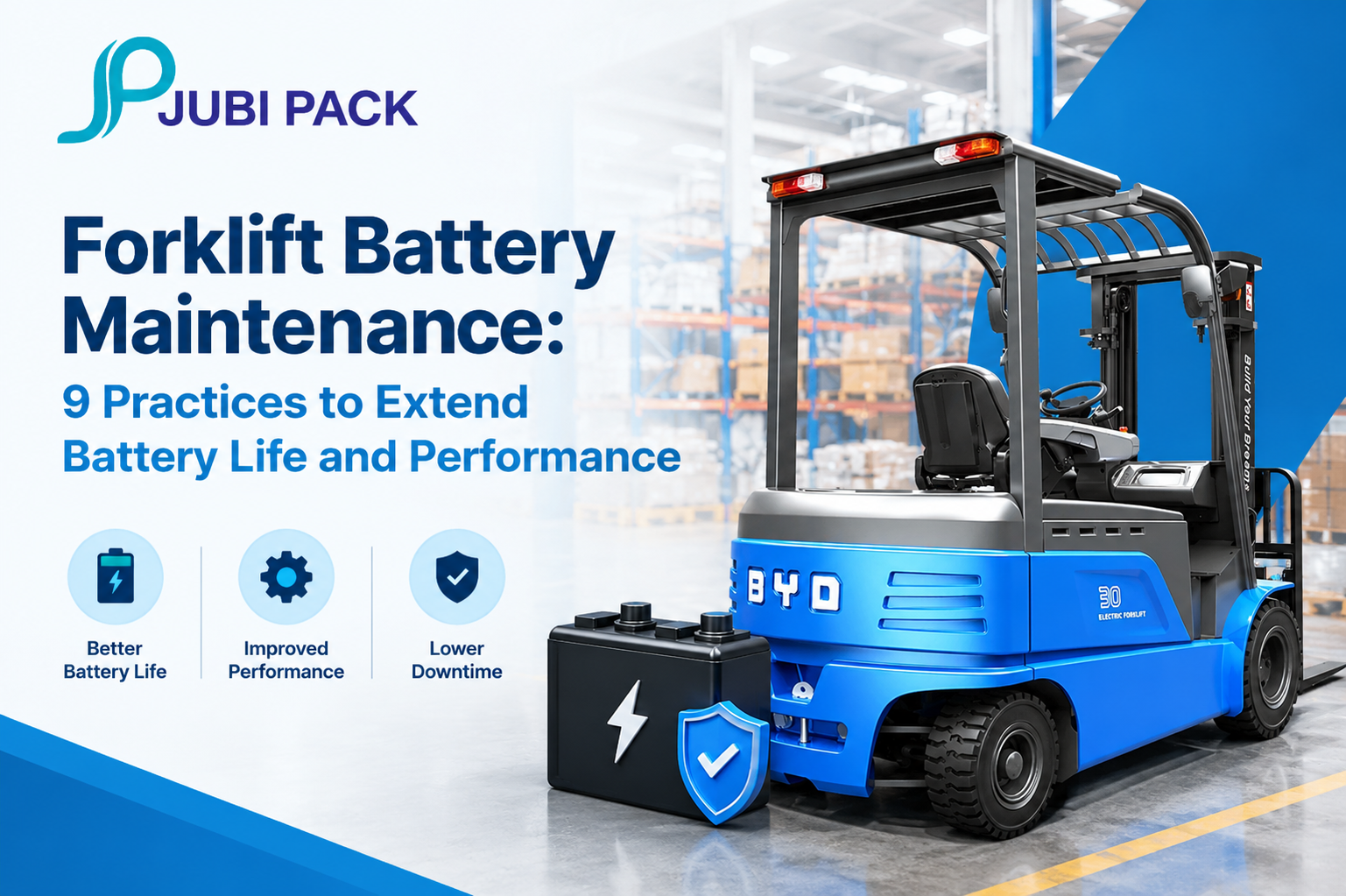
Forklift Battery Maintenance: 9 Practices To Extend Battery Life And Performance
A forklift battery plays a crucial role in warehouse productivity, equipment reliability, and operating costs. For businesses that depend on electric forklifts for daily material movement, proper battery maintenance helps minimise unexpected downtime, maintain consistent performance, and extend service life. Neglecting routine care can lead to reduced operating hours, charging problems, premature battery failure, and expensive replacements.
Whether you operate a lead-acid or lithium-ion forklift battery, following the correct maintenance procedures is essential. Although both technologies supply power to electric forklifts, their charging requirements, inspection routines, and maintenance needs differ significantly.
This guide explains nine practical ways to maintain a forklift battery, improve performance, and avoid common mistakes that can shorten battery life.
1. Follow the Correct Charging Routine
Charging practices directly affect battery performance and longevity. Always follow the forklift and battery manufacturer's charging instructions, including recommended charging current, voltage, temperature limits, and charging duration.
For traditional lead-acid batteries, avoid unnecessary partial charging and repeated interruptions when the manufacturer's guidance recommends completing a full charging cycle. These batteries generally require adequate time to recharge and cool before returning to demanding operations.
Lithium-ion batteries usually support opportunity charging, allowing operators to recharge during scheduled breaks when approved by the manufacturer. However, charging frequency, current limits, and temperature conditions must remain within the battery management system's specifications.
Avoid using an incompatible charger or repeatedly disconnecting the battery before charging is complete. A suitable charging routine helps maintain reliable power and reduces unnecessary battery stress.
2. Inspect the Battery Regularly
Routine inspections help identify minor issues before they develop into costly failures. Operators should check the battery before use and report unusual conditions immediately.
Inspect the battery casing for cracks, swelling, leakage, corrosion, and physical damage. Examine cables, connectors, insulation, and visible terminals for signs of overheating or deterioration. Check the charging equipment for damaged plugs, loose connections, and worn cables.
For lithium-ion batteries, pay attention to warning indicators and fault messages displayed by the battery management system. Do not ignore abnormal temperature warnings or charging faults.
A documented inspection checklist makes it easier to identify recurring problems and schedule preventive maintenance. Damaged batteries should be removed from service when necessary and assessed by qualified technicians.
3. Maintain Proper Electrolyte Levels in Lead-Acid Batteries
Lead-acid forklift batteries contain an electrolyte solution that requires appropriate monitoring. During charging, water can be lost through the normal electrochemical process, making periodic electrolyte checks important.
Use only the type and quality of water specified by the battery manufacturer, typically distilled or deionised water. Follow the manufacturer's instructions for when to check and replenish levels, as the correct timing can depend on the battery design and charging system.
Never allow the plates to become exposed. However, do not overfill the cells, because electrolyte can expand and overflow during charging. Many maintenance procedures require checking levels after charging, while water should be added before charging if plates are exposed, following the manufacturer's instructions.
Important: Lithium-ion forklift batteries do not require electrolyte replenishment. Never open a sealed lithium-ion battery pack or attempt internal repairs.
4. Keep Battery Terminals and Connectors Clean
Dirty, corroded, or loose electrical connections can increase resistance, cause overheating, and interrupt power delivery. Regular connector care is therefore essential for any electric forklift battery.
Inspect accessible terminals and connectors for corrosion, discolouration, damaged insulation, and loose fittings. Clean components only according to the manufacturer's procedure, using appropriate tools and protective equipment. Isolate the power supply when required and have qualified personnel perform electrical maintenance.
Avoid using metal tools carelessly around battery terminals, as accidental short circuits can produce dangerous currents. Do not apply grease, cleaning chemicals, or protective products unless they are approved for the specific connector type.
Keeping connections in good condition supports efficient power transfer and reduces the risk of electrical faults during forklift operation.
5. Control Battery Temperature
Temperature has a significant impact on battery performance, charging efficiency, and service life. Excessive heat can accelerate ageing, while cold conditions can reduce available capacity and affect charging behaviour.
Charge and store the battery within the temperature limits specified by its manufacturer. Ensure that charging areas have appropriate ventilation and that batteries are not exposed to direct heat sources or extreme environmental conditions.
Lead-acid batteries can generate heat and gas during charging, making suitable ventilation particularly important. Lithium-ion batteries generally incorporate a battery management system that monitors operating conditions, but this protection does not eliminate the need for proper temperature control.
If a battery becomes unusually hot, develops an unusual smell, or triggers a temperature warning, stop using it when safe to do so and follow the manufacturer's emergency procedures. Never attempt to cool a damaged battery using improvised methods.
6. Prevent Deep Discharge and Improper Storage
Repeatedly discharging a battery beyond its recommended limit can reduce its usable capacity and shorten its lifespan. Operators should follow the manufacturer's discharge limits and the forklift's battery monitoring indicators.
Lead-acid batteries are particularly vulnerable to damage from prolonged storage in a discharged state. Recharge them according to the manufacturer's instructions and avoid leaving them discharged after a shift.
Lithium-ion batteries typically have built-in protection against excessive discharge, but operators should still respect the recommended state-of-charge range. For extended storage, follow the specified charge level, isolation procedure, and periodic inspection schedule.
If a forklift will remain unused for an extended period, consult the battery documentation before disconnecting, charging, or storing it. Correct storage practices help preserve capacity and reduce the likelihood of unexpected failures when operations resume.
7. Follow the Correct Maintenance Requirements for Each Battery Type
Not every battery for forklift applications requires the same maintenance routine. Understanding the battery chemistry helps prevent unnecessary servicing and avoidable damage.
Lead-acid batteries generally require electrolyte-level checks, terminal inspections, appropriate ventilation, and periodic equalisation charging when specifically recommended by the manufacturer. Equalisation should never be performed on a battery unless the manufacturer confirms that the procedure is suitable.
Lithium-ion batteries typically require less routine maintenance because they are sealed and electronically monitored. Maintenance focuses on inspecting connectors, cables, casing, charging equipment, cooling arrangements where applicable, and battery management system alerts.
Lithium-ion batteries can charge faster and may support opportunity charging, depending on the model. However, their initial cost, charger compatibility, thermal management requirements, and repair procedures differ from those of lead-acid systems.
Selecting the correct maintenance schedule for a battery forklift truck helps prevent errors and improves equipment availability.
8. Avoid Common Mistakes That Shorten Battery Life
Several everyday mistakes can reduce battery reliability and increase operating expenses. Using the wrong charger, ignoring warning lights, exposing the battery to extreme temperatures, and allowing electrical connections to deteriorate can all create problems.
Other mistakes include overfilling lead-acid cells, using unapproved cleaning products, repeatedly exceeding discharge limits, and performing repairs without suitable training.
For multi-shift warehouses, charging arrangements should be planned around actual workload and battery requirements. A battery that is repeatedly rushed back into service without sufficient charging or cooling time may not deliver the expected performance.
Train operators to recognise warning signs and report problems promptly. Preventive maintenance is usually more effective than waiting for the forklift to lose power during a critical operation.
9. Maintain Records and Schedule Professional Servicing
A structured maintenance record helps businesses monitor battery condition over time. Record inspection findings, charging irregularities, faults, repairs, and relevant capacity or performance measurements.
For lead-acid batteries, technicians may assess electrolyte condition and perform manufacturer-approved electrical tests. For lithium-ion batteries, qualified service personnel can review fault codes, battery management system data, and diagnostic results where supported.
Professional inspections are particularly important when a battery shows reduced operating time, repeated charging failures, abnormal heating, or visible damage.
Reviewing these records helps identify recurring problems and supports better decisions about repairs, replacement, and equipment planning.
Conclusion
Effective forklift battery maintenance requires consistent charging practices, regular inspections, temperature control, correct cleaning procedures, and battery-specific care. Lead-acid batteries need appropriate electrolyte management, while lithium-ion batteries rely more heavily on electronic monitoring and manufacturer-approved servicing.
By following these nine practices, warehouse managers can reduce avoidable downtime, improve equipment reliability, and make informed decisions about battery replacement. Always prioritise the manufacturer's instructions and qualified technical support to keep every electric forklift operating safely and efficiently.